VOL. I / SECTION 02 / DOSAGE
Dose Ranges in the Research Literature
Dose values reported here belong to the species and route in which they were studied. This page does not recommend any human dose.
THE SHORT VERSION
The dose numbers on this page come from animal studies — rats, rabbits, and beagle dogs — and from three small uncontrolled human pilot reports. They are reproduced here as they appear in the published literature, in the species and route in which they were administered. This site does not perform allometric scaling from a rodent dose to a human equivalent, and does not recommend any human dose. The dominant rodent pairing across most Sikiric-group papers is 10 μg/kg and 10 ng/kg given intraperitoneally, run side by side, with comparable reported effects. Pharmacokinetic data from a 2022 rat-and-dog study report a plasma half-life under thirty minutes and modest intramuscular bioavailability. Everything else is extrapolation.
How to read this page
Caveat. The doses below are reproduced as they appear in the published literature, in the species and route in which they were administered. Allometric scaling from a rodent dose to a human dose is not a procedure this site performs. The published authors do, in one paper, propose an extrapolation [11]; that proposal is reported here as a single citation, not as guidance.
The peptide has not been approved by the FDA, EMA, MHRA, TGA, or any other major regulatory authority for use in humans. In September 2023 the U.S. FDA placed BPC-157 on its Category 2 list because of potential safety risks; its nomination is now recorded as withdrawn, while the stated safety concerns remain [18]. Neither a Category 1 listing nor permission to compound follows from that withdrawal. Prescription access involves a licensed clinician's judgment about the person, with the choice of treatment and the patient's state limiting what can be prescribed. There is no Therapeutic Use Exemption pathway under WADA because there is no approved human therapeutic indication [16].
Doses in the rodent literature
The dominant rodent dose across the published record is 10 μg/kg or 10 ng/kg — the two arms are run side-by-side in most Sikiric-group papers and are reported with comparable effects, suggesting an unusually flat dose-response. This pairing appears in the Achilles tendon transection study [1], the tendon-to-bone detachment study [3], the muscle/tendon angiogenesis study [4], the colocutaneous fistula work [7], the sciatic nerve transection study [8], the TBI mouse model [10], the anastomosis review [13], the quadriceps detachment study [14], the NSAID toxicity work [15], the duodenocolic fistula study [19], and the tracheocutaneous fistula study [23].
Elevated doses appear in two specific contexts. 200 μg/kg (with a 2 μg/kg comparator) was used in the Perovic et al. (2019) sacrocaudal spinal cord compression model as a single intraperitoneal injection 10 minutes post-injury [9]. 20 μg/kg intraperitoneal was used in the Demirtas et al. (2025) ischemia-reperfusion study [12].
In vitro and drinking-water concentrations recur with their own values. Chang et al. (2014) used 0.1, 0.25, and 0.5 μg/mL in tendocyte culture media [2]. The drinking-water arm in Matek et al. (2025) was 0.16 μg/mL or 0.16 ng/mL, yielding an effective intake of approximately 10 μg/kg/day or 10 ng/kg/day given typical rat fluid consumption of around 12 mL per day [14].
Doses in larger species
Rabbit work is limited. Sebecic et al. (1999) used 10 μg/kg body weight in rabbits with segmental bone defects, administered by local injection into the defect and by intermittent and continuous intramuscular dosing [5].
Dog data come primarily from He et al. (2022), who studied pharmacokinetics in beagles after intramuscular dosing at 6, 30, and 150 μg/kg [11]. The 2025 Pharmaceuticals review by Jozwiak et al. summarizes acute toxicology across rats and dogs and reports no observed teratogenic, genotoxic, anaphylactic, or local toxic effects at high doses — Sprague-Dawley rats tested up to 20 mg/kg intramuscular and beagle dogs up to 10 mg/kg intramuscular [18]. The same review flags theoretical safety concerns from VEGFR2-mediated angiogenesis and proline-derived reactive oxygen species.
Doses in the published human reports
Three published human reports exist, all from a single investigator group, all small and uncontrolled [17].
Lee and Padgett (2021) administered intra-articular BPC-157 to the knees of 16 patients; 14 reported pain relief. The intra-articular dose volume is in the source publication.
Lee et al. (2024) administered 10 mg intravesicular BPC-157 by bladder injection to 12 women with interstitial cystitis previously unresponsive to pentosan polysulfate; 80-100% reported symptom resolution.
Lee and Burgess (2025) administered single-arm intravenous infusion at doses up to 20 mg in healthy volunteers; the peptide was reported as well tolerated with no adverse events and clearance within 24 hours.
For the historical Pliva Phase II ulcerative colitis program (PL 14736), the route was rectal enema; the trial was reported as safe and well tolerated; full efficacy data were never published [6].
Routes studied
The published rodent literature has used intraperitoneal injection, intragastric gavage, peroral administration via drinking water, subcutaneous injection, intramuscular injection, and topical application (cream, 1 μg/g). The 2025 human reports add intravenous, intra-articular, and intravesicular routes.
Peroral administration in drinking water is unusual for a peptide and depends on the molecule's reported stability in gastric juice — a property attributed by the discoverers to the triple-proline tract at positions 3-5 of the GEPPPGKPADDAGLV sequence. Oral bioavailability has not been formally quantified in healthy humans.
Pharmacokinetics
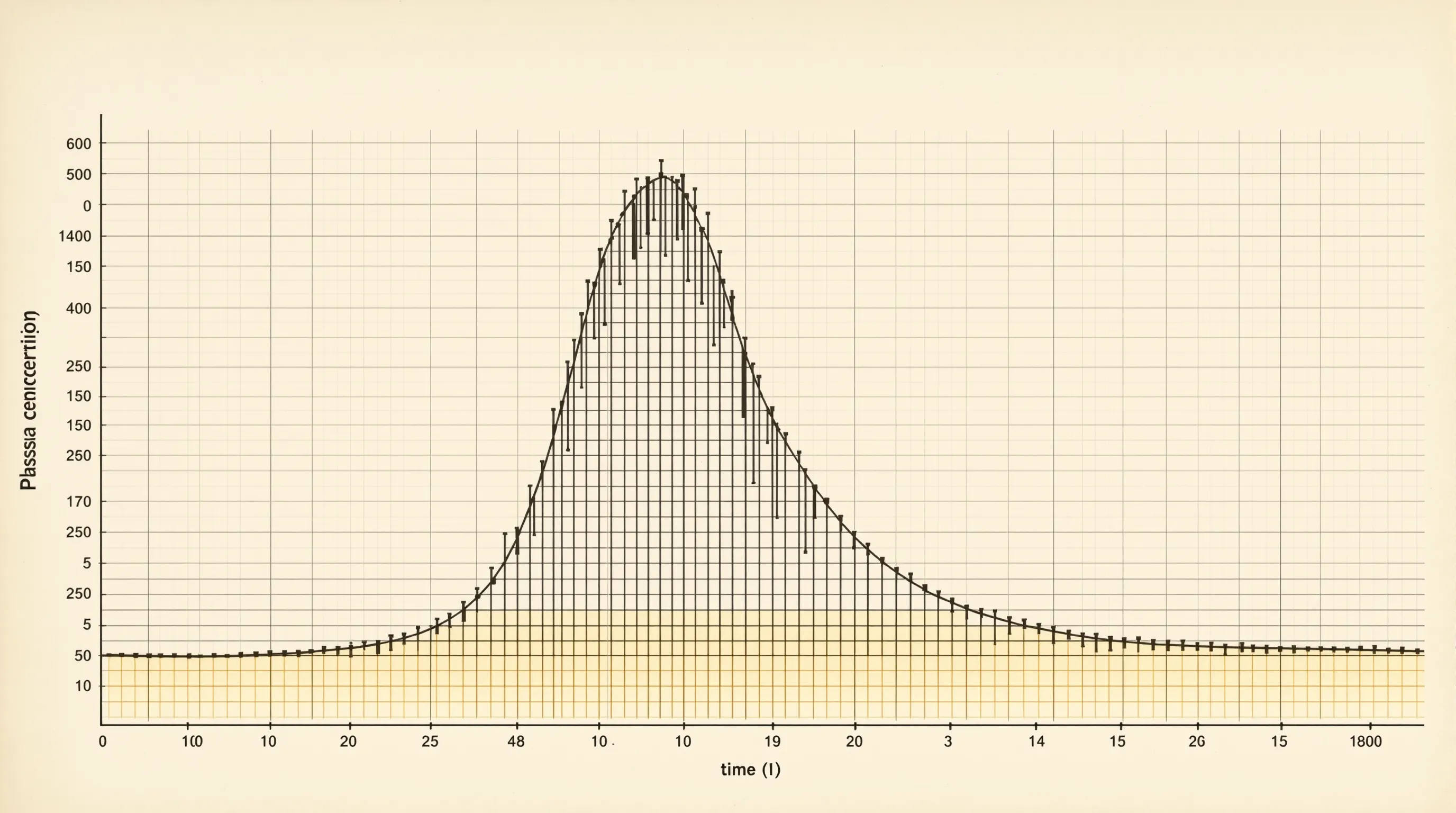
See Fig. 4 (idealized plasma-concentration curve). He et al. (2022) reported intramuscular bioavailability of 14-19% in Sprague-Dawley rats and 45-51% in beagle dogs across dose ranges of 20-500 μg/kg (rat) and 6-150 μg/kg (dog) [11]. Peak plasma concentration was reached at approximately 3 minutes in rats and 6-9 minutes in dogs. Plasma half-life was under 30 minutes in both species. Metabolism produced six small peptide fragments terminating in free amino acids, with proline notable among the terminal residues. Elimination occurred in urine and bile.
The authors used these data to propose an extrapolated human dose of approximately 200 μg per person per day based on rat-dog scaling. This site reports their proposal as a published claim and does not recommend it.